
The Coming Storm: PKR’s Biggest Exodus
Rafizi Ramli’s break threatens PKR’s survival, risking its third major exodus and deepest grassroots divide ahead of PRU16.

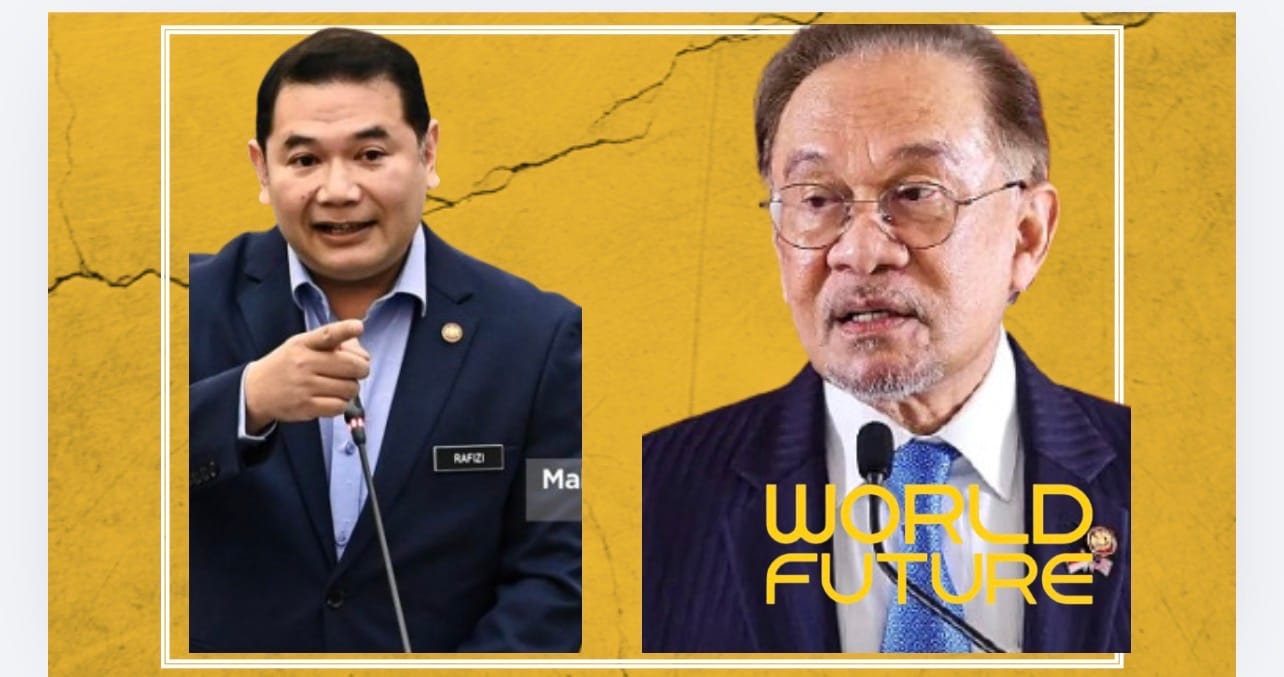
In Malaysia’s political history, PKR has endured two major ruptures. The first came after Anwar Ibrahim returned to the party in 2004, a move that alienated many who disagreed with his leadership choices. The second, in 2020, followed the 2018 general election victory, when a bloc of MPs defected to form a new government without Anwar, driven largely by resistance to his ambition of becoming Prime Minister.
Now, a third and potentially most devastating split looms. Former Economy Minister Rafizi Ramli, long seen as PKR’s strategist and data-driven campaigner, has openly declared he will not contest under the PKR banner in PRU16. His influence stretches beyond his Pandan constituency, resonating in Ampang, Setiawangsa, Wangsa Maju, and Petaling Jaya—urban strongholds where MPs are closely aligned with him. If these MPs follow Rafizi into battle outside PKR, Kuala Lumpur’s political map could flip overnight.
PKR - the exodus
This rupture is not about party machinery alone. It is about who truly commands the grassroots, who owns the voter data, and who has credibility on the ground. Rafizi’s departure signals a rebellion against Anwar’s leadership style, which many argue has buried reformist promises while demanding loyalty from MPs who face mounting disillusionment among voters. Unlike the 2020 split, which was about blocking Anwar’s path to the premiership, this divide is about Anwar’s transformation—his perceived abandonment of reform in favor of consolidating personal power.
If Rafizi’s exodus gathers momentum, it will be the deepest cut yet: a rebellion at the party’s root, not just its branches. PKR risks being hollowed out from within, reduced to a shell of its former self on the national stage. For voters, PRU16 may not be about party logos anymore. It may be about individuals who command trust, who can mobilize the streets, and who embody the reformist spirit that PKR once promised but has now, in the eyes of many, forsaken.
The potential Rafizi’s move could become a historic turning point, potentially eclipsing the earlier two splits in scale and impact.
Anwar however seems oblivious of the gravity of the situation. Some are saying he is deliberately obliterating the party‘s other half to consolidate his grip.
But history could prove him wrong this time as both the voters and the party cadres are sorely divided on his political moves since he became the 10th Prime Minister of Malaysia.