Trump Announces U.S. Capture of Nicolás Maduro, Echoing Noriega Arrest 36 Years Later
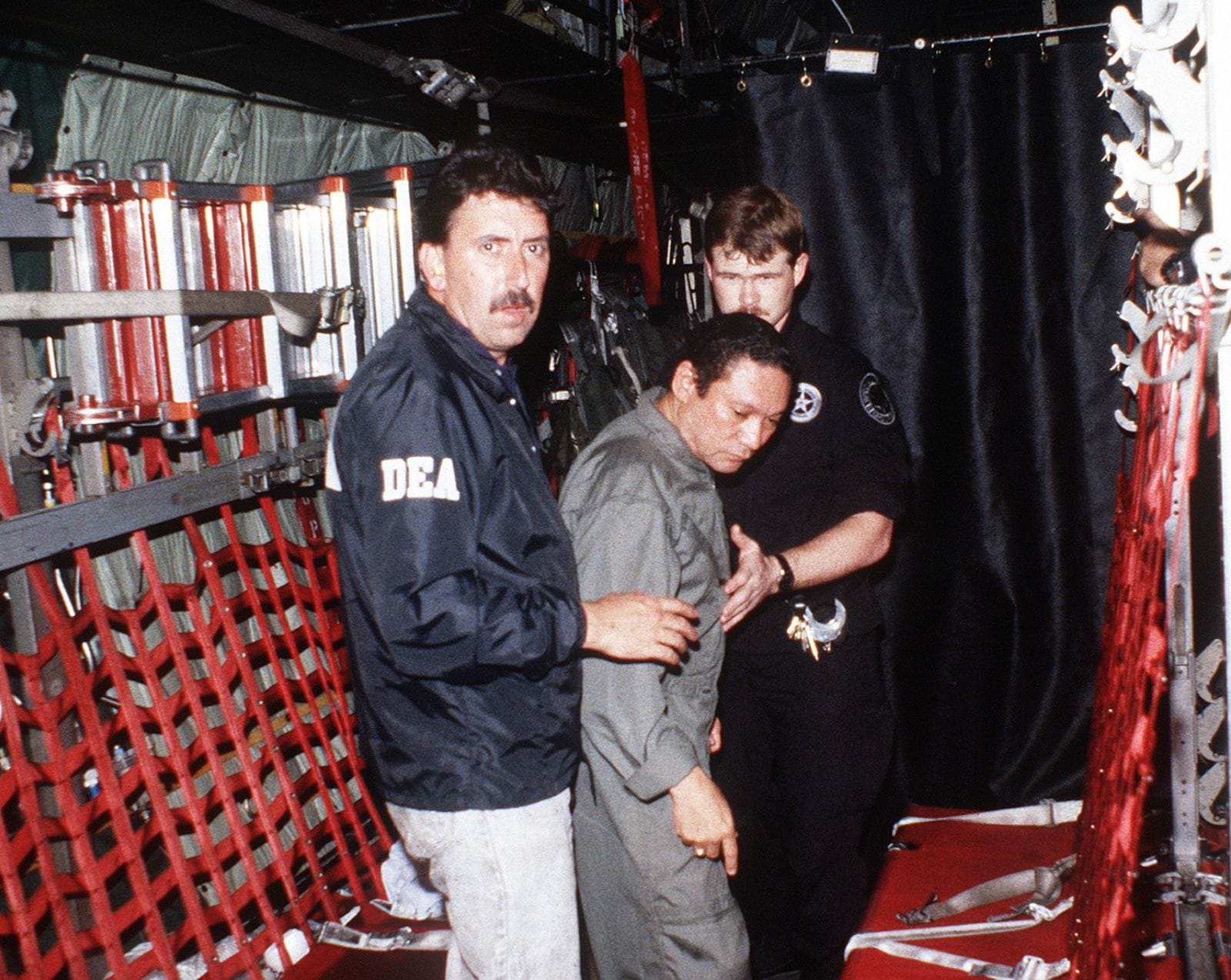
Noriega hid in the Vatican embassy before surrendering on January 3, 1990. He was tried in the U.S. on drug charges, convicted, and imprisoned for decades

President Donald Trump announced early Saturday morning that U.S. forces had captured Venezuelan President Nicolás Maduro and his wife, Cilia Flores, during a large-scale military strike on Caracas, exactly 36 years after the January 3, 1990, surrender of Panamanian dictator Manuel Noriega to American authorities.
Noriega, a former CIA informant who rose from Panama City's slums to lead the country in the 1980s, initially allied with the U.S. against drug trafficking but fell out of favor over independence demands and bribery allegations involving drug routes. In 1989, President George H.W. Bush ordered a U.S. invasion of Panama, deploying 24,000 troops.
Noriega Arrest
Noriega hid in the Vatican embassy before surrendering on January 3, 1990. He was tried in the U.S. on drug charges, convicted, and imprisoned for decades, later extradited to France and Panama. Noriega apologized in a 2015 interview and died in 2017 at age 83, marking the end of Panama's military era.
House Intelligence Chair Rep. Rick Crawford (R-Ark.) highlighted the parallel, stating: "This is a historic day in the Western Hemisphere, 36 years after the capture of Manuel Noriega... The arrest of Cartel De Los Soles leader Nicolas Maduro shows this clearly." Crawford urged Venezuelans to reclaim freedom, emphasizing U.S. resolve against cartels dominating regional nations.
The Maduro operation, facing international scrutiny, underscores ongoing U.S. efforts to address indicted Latin American leaders accused of narco-trafficking.
 Johan Chairil