
Three Leaders. One Failed Mission.
Three leaders, two victories and one failed mission. Pakatan Harapan's repeated compromises abandoned Reformasi, alienated loyal supporters and contributed to three consecutive state election defeats.

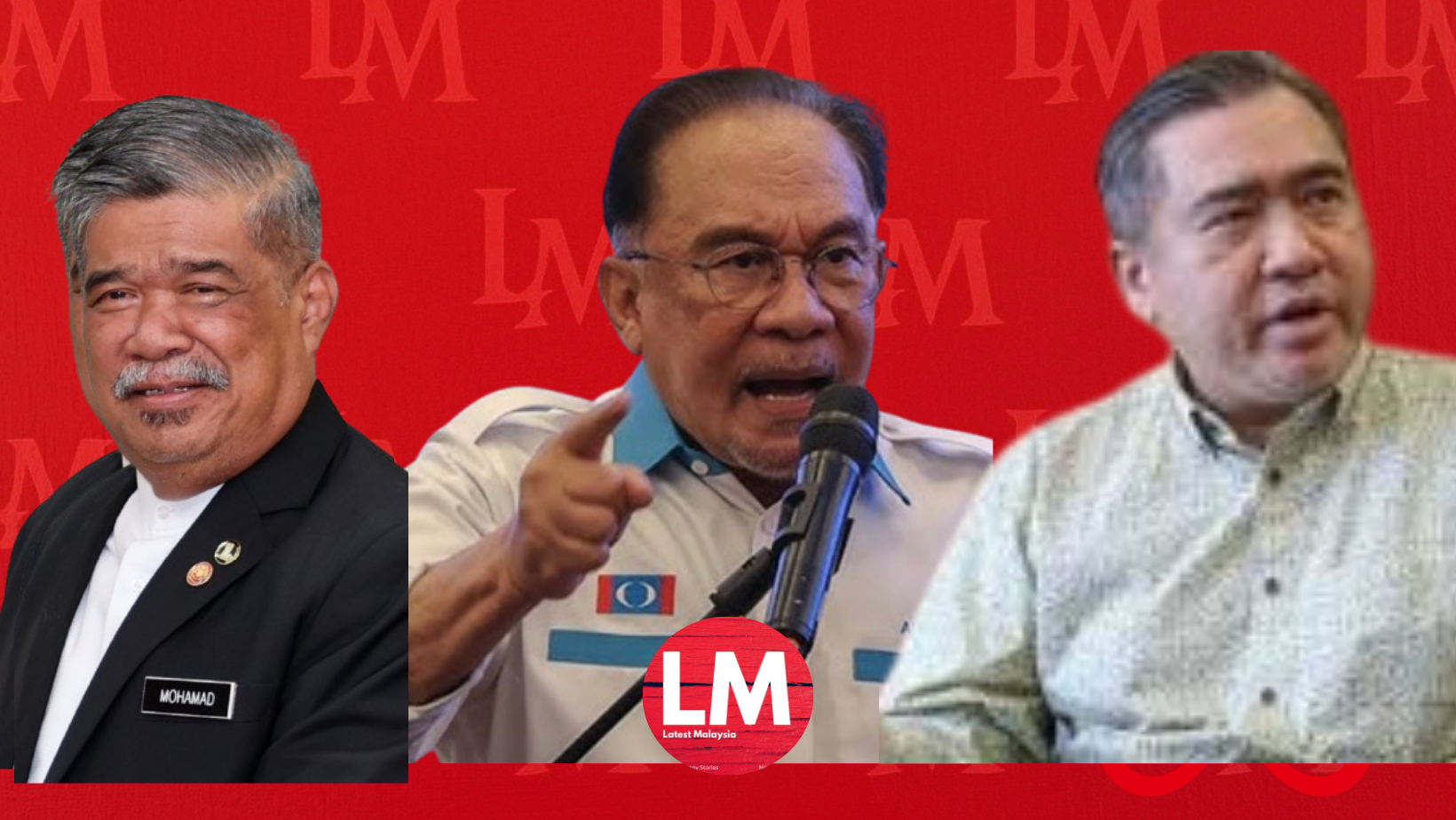
Three consecutive state election defeats have exposed a deeper problem within Pakatan Harapan (PH). They are not isolated setbacks, but the culmination of a failed political mission under the coalition’s three most influential leaders.
PH won federal power twice, in 2018 and again in 2022. Both victories carried enormous public expectations. Yet on both occasions, the coalition failed to consolidate its mandate, allowing internal divisions, strategic missteps and political compromises to overshadow the reform agenda that brought it to power.
The first collapse came in 2020 when PH was ousted through the Sheraton Move. The crisis fractured PKR, with a group of MPs defecting to help form the Perikatan Nasional government under Muhyiddin Yassin. That episode fundamentally altered Malaysia’s political landscape.
Mahathir Mohamad’s return as prime minister during PH’s first administration remains one of its most consequential decisions. For decades, Mahathir had positioned himself against both DAP and Anwar Ibrahim. Yet PH accepted him as its leader, believing he could deliver stability and electoral success. Instead, many supporters saw a government hampered by conflicting priorities, slow decision-making and a leadership style that often left coalition partners following rather than shaping policy.
The cost was immense. Public confidence eroded, internal mistrust deepened and the coalition never fully recovered from the events of 2020.
Today, the responsibility rests with PH’s current leadership — Anwar Ibrahim, Anthony Loke Siew Fook and Mohamad Sabu. While the coalition returned to Putrajaya in 2022, it did so without a clear majority and was compelled to govern alongside its long-time rival, Barisan Nasional, a partnership that many supporters once considered unthinkable.
Three state election defeats later, PH faces uncomfortable questions. Has it drifted too far from the ideals that inspired voters in 2018? Has governing become an exercise in political survival rather than political transformation?
For a coalition that promised reform, the greatest challenge is no longer winning power. It is proving that it still knows what to do with it.
A failed mission
If the first failure was losing power in 2020, the second was far more damaging. It was the gradual abandonment of the very movement that gave Pakatan Harapan its reason to exist.
Reformasi was never just about putting Anwar Ibrahim in Putrajaya. It was about changing the way Malaysia was governed. It was about dismantling old political habits, strengthening institutions and proving that power could be exercised differently.
Instead, Anwar's premiership slowly took a different path.
Whether by necessity or political calculation, Anwar appeared to shift his focus away from Reformasi and towards securing the support of former adversaries. He inherited a fragile government that depended on Barisan Nasional's backing, but as time passed, political survival seemed to eclipse political transformation.
At the same time, Anwar became the target of an unprecedented online assault. For more than two years, Malaysian social media was saturated with personal attacks, ridicule and relentless anti-Anwar narratives. PAS, Bersatu, opposition leaders, cyber troopers and influencers attacked him daily, often portraying him as illegitimate or incapable of governing. Few prime ministers have faced such sustained hostility in the digital age. Even during the height of the 1MDB scandal, Najib Razak's online treatment was arguably different in both scale and intensity.
Yet instead of responding by accelerating reforms and reminding supporters why they had fought for him for decades, Anwar chose accommodation.
To many Reformasi supporters, the decision to work closely with UMNO was understandable. The perception that followed was not. The reduction of Najib Razak's sentence through the royal pardon process, the discharge not amounting to an acquittal (DNAA) granted to Ahmad Zahid Hamidi, and a series of compromises reinforced the belief among critics that the old political order was not being challenged but rehabilitated.
That perception became PH's greatest political liability.
Anthony Loke remained the coalition's dependable administrator, but many supporters expected more than administrative competence. They expected the leader of DAP to speak up when Reformasi appeared to lose its direction. Instead, his silence was interpreted by critics as consent.
Mohamad Sabu found himself in a similar position. Once one of Reformasi's most recognisable faces, he became identified more with defending the government's longevity than championing the movement's original ideals. Appeals for the government to complete its full term may have reflected a desire for stability, but they did little to reassure supporters who were waiting for meaningful reform.
The common thread running through all three leaders was not incompetence.
It was the perception of abandonment
Reformasi supporters did not expect every promise to be fulfilled overnight. They understood the arithmetic of coalition politics. But they expected visible progress. Laws such as SOSMA could have been reviewed early to signal that institutional reform remained alive. Bread-and-butter measures, including modest reductions in fuel prices or broader cost-of-living relief, might have reinforced the message that the new government still stood with ordinary Malaysians before embarking on more difficult structural reforms.
Instead, many supporters watched their leaders invest political capital in preserving a coalition rather than expanding the Reformasi agenda. They felt abandoned, rejected and used by the politicians for a certain goal.
Ironically, the compromises did not appear to earn lasting political loyalty from their new partners either. UMNO continued pursuing its own interests, while opposition parties remained relentless in attacking Anwar and the Madani administration. In several state elections, PH found itself defending a political bargain that satisfied neither its traditional supporters nor its fiercest critics.
That may prove to be the coalition's greatest strategic mistake.
In trying to keep everyone at the table, it risked losing the people who built the table in the first place. And the tree leaders, Anwar, Anthony and Mat Sabu have to answer for the failed mission!
 Editorial