
Malaysia's Political Limbo: Why Everyone Suddenly Wants a Deal With UMNO-BN
Recent political signals suggest UMNO president Ahmad Zahid Hamidi is keeping multiple options open, including continued cooperation with Pakatan Harapan, negotiations with PN

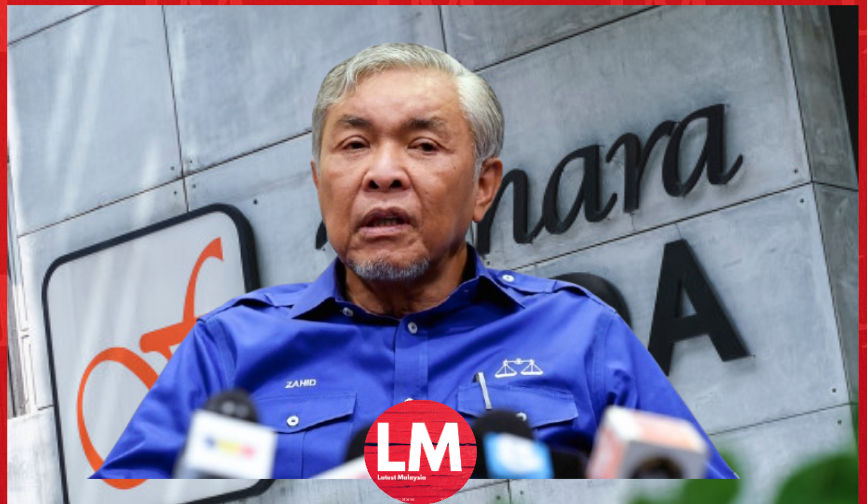
KUALA LUMPUR: Malaysia's political landscape is entering a period of unusual uncertainty as parties on both sides of the political divide manoeuvre for an alliance with UMNO and its Barisan Nasional coalition ahead of the next general election.
The dramatic Johor and Negeri Sembilan state election results have altered the balance of power.
BN's overwhelming victory in Johor demonstrated that UMNO still possesses an electoral machine capable of winning large numbers of seats when Malay votes are consolidated. In Negeri Sembilan, cooperation between BN and the PAS-led Perikatan Nasional produced another major victory, intensifying speculation that the two blocs could eventually work together nationally.
But BN is not necessarily committed to PN.
Recent political signals suggest UMNO president Ahmad Zahid Hamidi is keeping multiple options open, including continued cooperation with Pakatan Harapan, negotiations with PN, or a more flexible arrangement depending on individual states and constituencies. Analysts have described the negotiations as increasingly driven by electoral mathematics rather than ideology.
That makes UMNO the potential kingmaker of Malaysia's next political contest.
University of Nottingham Malaysia associate professor Tricia Yeoh argues that the BN-PH partnership has brought stability but has not necessarily delivered the institutional reforms expected when the unity government was formed. Key reforms, including limits on the prime minister's tenure, separation of the attorney-general and public prosecutor's powers and freedom-of-information legislation, remain unfinished.
Political analyst Asrul Hadi, however, argues that coalition politics has created useful checks and balances because PH, BN and East Malaysian parties each retain their own political weight. The result is more complicated decision-making, but also greater pressure to negotiate and reach consensus.
The attraction of BN-PN is obvious: both blocs can consolidate Malay support and reduce three-cornered fights.
But it carries risks.
Yeoh warns that a BN-PN arrangement could be easier to sell as a simple Malay-unity message but might struggle to articulate a sufficiently inclusive national vision for Malaysia's multi-ethnic electorate.
For PH, meanwhile, the danger is that it could lose UMNO while failing to rebuild its own Malay support.
For UMNO, the calculation is different. It now has evidence that it can win without PH — but not yet proof that it can win nationally without partners.
That is why Malaysia's politics is in limbo.
The parties are not simply deciding who should govern. They are calculating who can deliver enough seats, enough Malay support and enough regional backing to form the next government.
And for now, almost everyone wants UMNO on their side.
 Kazi Mahmood